

Amzonite Highlights Seven Key Investment Categories for Private Investors
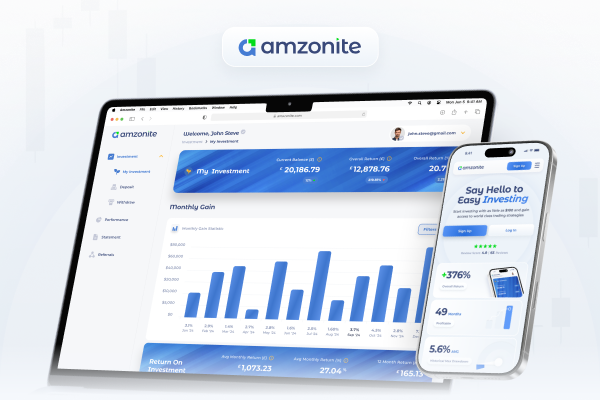
Amzonite
Martin Robinson, Director at Amzonite, has more than a decade of experience in financial markets and fintech to provide a perspective on how these asset classes are approached by private investors.
Stocks: Growth Through Equity Ownership
Equities represent partial ownership of companies, offering potential for both capital appreciation and dividends. Stocks are often central to long-term growth strategies, but performance can vary across sectors, regions, and economic cycles.
“Stocks are still the primary engine of long-term portfolio growth,” Robinson said. “The emphasis today is on diversified exposure rather than chasing short-term trends.”
Investors increasingly integrate strategies, focusing on emerging sectors such as technology, healthcare, or sustainable energy, to align with structural market trends while mitigating risk through diversification.
Bonds: Reliable Income and Portfolio Stability
Bonds are debt instruments issued by governments or corporations, providing fixed or variable interest payments over time. They are generally considered lower risk than equities and can help stabilise portfolios, particularly during periods of market volatility.
“Fixed income has regained attention as a stabiliser in current markets,” Robinson explained. “With interest rates at historically higher levels, bonds offer both predictable income and a way to balance growth-focused assets.”
Different bond types, including government, corporate, and inflation-linked instruments allow investors to tailor exposure to income requirements and risk tolerance.
Property: Tangible Assets with Income Potential
Real estate has long been a core component of private wealth. It can deliver rental income, tax benefits, and long-term appreciation. Today, property investment is evolving, with fractional ownership, digital real estate assets, and Real Estate Investment Trusts (REITs) expanding access beyond traditional holdings.
“Property remains a cornerstone of diversified portfolios,” Robinson noted. “The way investors access and manage these assets is changing, offering more flexibility and broader participation.”
Location, yield, and leverage continue to be critical factors in achieving sustainable returns.
Commodities: Diversification and Inflation Hedging
Commodities such as gold, oil, and industrial metals often behave differently from equities and bonds, providing diversification and serving as a hedge against inflation or geopolitical risk.
“Commodities can be overlooked, but they play an important role in risk management,” Robinson said. “Their value depends on timing, positioning, and understanding macroeconomic cycles.”
Careful allocation to commodities can provide resilience in portfolios during periods of uncertainty.
Funds: Broad Exposure with Efficiency
Mutual funds and exchange-traded funds (ETFs) pool investor capital to access diversified portfolios of assets. They enable exposure to global markets, sectors, and investment strategies without the need for hands-on management.
“ETFs have transformed how investors access markets,” Robinson explained. “They offer transparency, flexibility, and cost-effective diversification that was previously the domain of institutional investors.”
Investors can now target specific themes, sectors, or geographies through a single fund, supporting both strategic allocation and risk management.
Managed Funds: Professional Strategies for Private Investors
Managed investment funds actively deploy capital using professional strategies to pursue returns in liquid markets such as foreign exchange, indices, and commodities. They use data-driven models, real-time analysis, and risk management techniques to balance opportunity and downside protection.
“Active management is increasingly popular with private investors seeking diversification beyond standard indices,” Robinson said. “Properly managed, these funds provide access to sophisticated strategies with daily liquidity and global diversification.”
Cash and Cash-Equivalent Assets: Liquidity and Optionality
Cash holdings and short-term instruments provide liquidity and flexibility, allowing investors to respond quickly to market changes or preserve capital during volatility.
“Cash is a strategic component of portfolio construction,” Robinson noted. “It allows investors to act decisively when opportunities arise and maintain stability during uncertain periods.”
Cash-equivalent assets can include high-interest savings accounts, money market funds, or short-term government securities, offering low volatility and capital preservation.
Context for Modern Private Investors
Amzonite’s report highlights a trend among private investors toward adopting more sophisticated, institutional-grade approaches to portfolio construction. Effective strategies balance multiple asset classes to achieve growth, income, and resilience across market cycles.
Robinson concluded, “Private investors today are increasingly seeking the same analytical rigour and tools once reserved for large funds. A diversified, disciplined approach allows them to manage risk while capturing opportunities across different market conditions.”
Disclaimer:
This content is for informational purposes only and does not constitute financial, investment, or legal advice. Past performance is not indicative of future results, and all investments carry risk. Investors should conduct their own due diligence or consult a qualified financial advisor before making investment decisions. Amzonite does not provide personalised financial advice, and any strategies referenced are illustrative and general in nature.
Editorial PR Team
One March Digital
email us here
Legal Disclaimer:
EIN Presswire provides this news content "as is" without warranty of any kind. We do not accept any responsibility or liability for the accuracy, content, images, videos, licenses, completeness, legality, or reliability of the information contained in this article. If you have any complaints or copyright issues related to this article, kindly contact the author above.
